The Biggest Challenges Talent Managers Face When Managing Creators
Date Published
Mar 11, 2026
Written by
Michael Gratteri
Time to Read
5 min
The creator economy has grown rapidly over the past decade. In the United States alone, thousands of influencers and digital creators collaborate with brands every day across platforms like Instagram, TikTok, YouTube, and emerging social networks.
Behind many of these creators are talent managers and creator agencies responsible for managing partnerships, negotiating deals, organizing campaigns, and ensuring creators deliver results for brands.
While the opportunities in this industry are enormous, managing creators comes with a unique set of operational challenges. As agencies grow and handle more creators, these challenges become even more complex.
Understanding these common issues can help talent managers build better workflows and adopt tools that make creator management more efficient.
Finding the Right Brand Opportunities
One of the biggest responsibilities of talent managers is identifying brands that align with their creators.
This process often involves:
Researching brands within a creator’s niche
Identifying marketing contacts
Pitching collaboration ideas
Following up with outreach
When agencies represent multiple creators, manually searching for brand opportunities can quickly become overwhelming. Without structured systems or reliable talent manager tools, valuable partnership opportunities can easily be missed.
Managing Outreach and Brand Communication
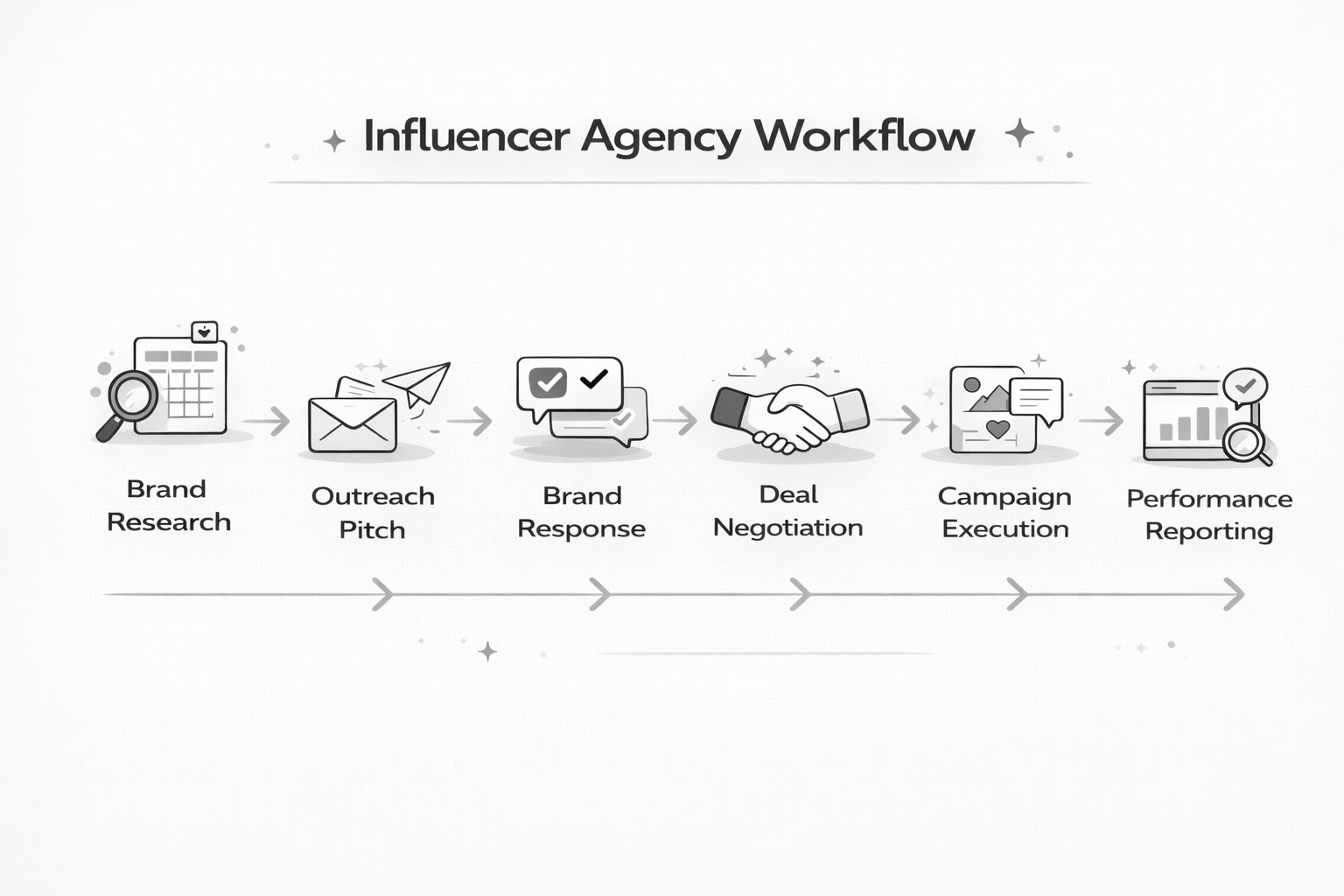
Outreach is a critical part of the influencer agency workflow. Talent managers must communicate with brands regularly to pitch collaborations, negotiate terms, and coordinate campaign deliverables.
However, most agencies still manage these conversations through scattered email threads.
This creates several problems:
Conversations get lost in inboxes
Follow-ups are missed
Multiple deals become difficult to track
Without a centralized system, keeping track of ongoing negotiations becomes one of the most frustrating creator management challenges for agencies.
Keeping Track of Multiple Creator Deals
Once brands begin responding to pitches, the next challenge is managing multiple deals simultaneously.
Talent managers must track:
Which brands have been contacted
Which deals are under negotiation
Campaign timelines and deliverables
Contract agreements and payment status
Many agencies still rely on spreadsheets or manual tracking methods. While this may work initially, it becomes difficult to maintain accuracy as the number of creators and partnerships grows.
A structured deal pipeline can significantly improve visibility and help agencies stay organized.
Handling Contracts and Agreements
Contracts are a crucial part of every brand partnership. Talent managers must ensure that all deliverables, timelines, usage rights, and payment terms are clearly documented.
However, creating contracts manually for every collaboration takes time and increases the risk of inconsistencies.
For agencies managing many deals, contract management becomes another operational bottleneck within the influencer agency workflow.
Tracking Campaign Performance
Once a campaign is live, agencies must monitor how creators are performing.
Brands expect clear results, which means talent managers must track:
Engagement rates
Audience reach
Content performance
Campaign outcomes
Measuring campaign performance across multiple creators and platforms can become difficult without the right analytics tools. Many agencies struggle to compile this data into clear reports for brand partners.
Managing Payments and Revenue Tracking
Another challenge talent managers frequently face is managing financial operations.
After campaigns are completed, agencies must ensure:
Creators are paid on time
Invoices are sent to brands
Revenue is tracked accurately
When payments, deals, and campaigns are handled through separate tools, financial visibility becomes limited. This can create confusion about which deals have been paid and which are still pending.
Why Talent Managers Need Better Tools
As creator agencies grow, these challenges compound. Managing a handful of creators might be possible with manual processes, but scaling operations requires more structured systems.
Modern talent manager tools are designed to simplify the entire creator management process by connecting multiple functions into one platform.
These tools help agencies:
Discover brand opportunities
Manage outreach conversations
Track deals and negotiations
Generate contracts
Monitor campaign performance
Manage invoices and payouts
By organizing these processes into a single workflow, agencies can reduce operational chaos and focus more on building meaningful brand partnerships.
A Smarter Way to Manage Creator Partnerships
To solve many of these operational challenges, platforms like Creator24 have emerged as AI influencer management platforms designed specifically for talent managers and creator agencies.
Instead of relying on multiple disconnected tools, Creator24 helps agencies manage the entire creator partnership lifecycle in one place.
From discovering brand opportunities to sending outreach, tracking deals, generating agreements, managing payments, and monitoring campaign performance, everything is organized within a structured system.
This allows talent managers to spend less time managing spreadsheets and email threads and more time building successful brand collaborations for their creators.
The Future of Creator Management
The creator economy continues to expand, and talent managers play a crucial role in connecting creators with brands. As the industry grows, the need for efficient workflows and smarter management tools will only increase.
Agencies that adopt structured systems and modern creator management platforms will be better equipped to handle larger creator rosters, close more brand deals, and deliver stronger results for brand partners.
By addressing common creator management challenges with the right technology and processes, talent managers can focus on what truly matters — helping creators grow and building long-term brand partnerships.