The Hidden Cost of Poor Media Kits: Why Brands Ignore Creator Pitches
Date Published
May 9, 2026
Written by
Michael Gratteri
Time to Read
5 min
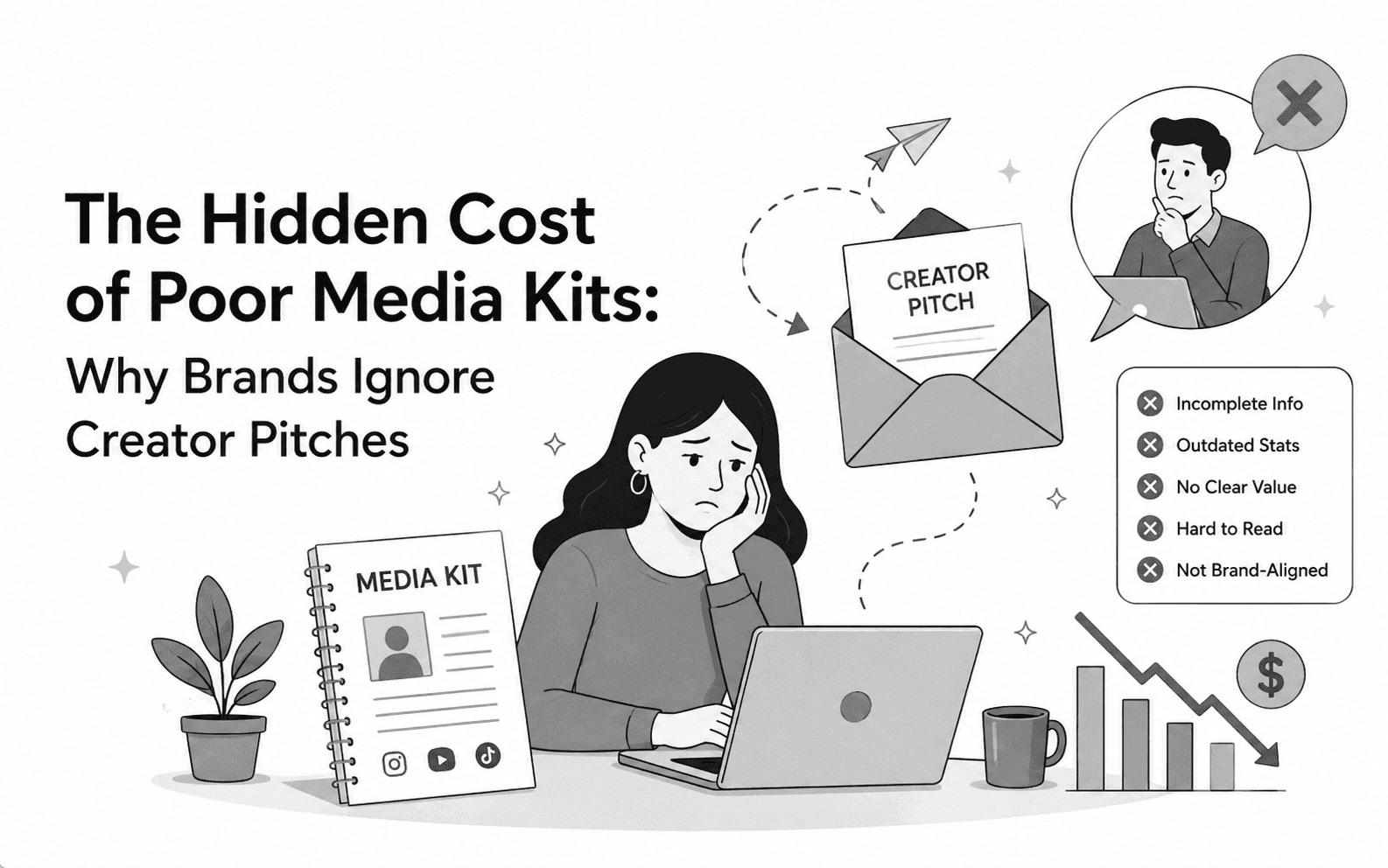
Every creator wants brand deals.
Every talent manager wants more successful partnerships.
Yet thousands of creator pitches land in brand inboxes every week and never receive a reply.
Many creators assume the problem is their follower count. Others blame competition, bad timing, or the economy. In reality, one of the most overlooked reasons is much simpler: a poor media kit.
A weak media kit can instantly reduce a creator's credibility, make collaboration opportunities harder to secure, and cause brands to move on to another candidate within seconds.
If you're serious about attracting sponsorships, partnerships, and long-term brand relationships, your media kit deserves as much attention as your content strategy.
Why Brands Review Media Kits So Quickly
Most brands and agencies are evaluating dozens or even hundreds of creators for a single campaign.
Marketing managers don't have time to analyze every social profile manually. They rely on media kits to help them make fast decisions.
When a creator sends a pitch, brands typically look for answers to a few basic questions:
Who is this creator?
Who follows them?
What type of content do they create?
Have they worked with brands before?
Are they a good fit for our campaign?
If the answers aren't immediately clear, the creator often gets skipped.
The harsh reality is that many creators lose opportunities not because they're unqualified, but because their information is difficult to find.
Common Problems That Make Brands Ignore Creator Pitches
1. Outdated Statistics
One of the biggest mistakes creators make is sending media kits that haven't been updated for months.
Follower counts, engagement rates, audience demographics, and campaign results change constantly. Brands want current information.
Nothing damages trust faster than discovering that the numbers in a media kit don't match the creator's actual profile.
2. Too Much Information
Many creators treat media kits like resumes.
They include every achievement, every platform, every campaign, and every metric they've ever collected.
Brands don't want a 20-page presentation.
They want relevant information presented clearly and quickly.
A concise media kit often performs better than a lengthy one.
3. Missing Audience Insights
Follower count alone means very little today.
Brands care about audience quality.
Questions they want answered include:
Where is the audience located?
What age groups follow the creator?
What are their interests?
Are they active buyers?
Without audience data, brands struggle to determine whether a creator aligns with their target market.
4. No Clear Personal Brand
Many creator pitches look identical.
Generic descriptions such as "lifestyle creator" or "content creator" don't help brands understand what makes someone unique.
Strong creators communicate a clear niche and value proposition.
Brands want specialists, not generalists.
5. Poor Design and Presentation
A media kit doesn't need expensive graphic design.
However, it should look professional, organized, and easy to read.
Broken layouts, inconsistent formatting, low-quality screenshots, and cluttered pages can create the impression that a creator is not ready for professional partnerships.
The Real Cost of a Weak Media Kit
Most creators measure success by the deals they win.
Few measure the deals they never hear about.
A poor media kit creates invisible losses:
Missed sponsorship opportunities
Lower response rates from brands
Reduced negotiating power
Longer sales cycles
Lost repeat partnerships
Over time, these missed opportunities can have a significant impact on creator revenue.
For agencies managing multiple creators, the problem becomes even larger. An ineffective media kit process can slow down outreach efforts, reduce conversion rates, and make talent management far more difficult.
What Brands Actually Want to See
A high-performing content creator media kit usually includes:
Creator Overview
A concise introduction explaining who the creator is and what content they produce.
Audience Insights
Demographics, locations, interests, and audience behavior.
Performance Metrics
Key engagement statistics and platform growth trends.
Brand Collaborations
Previous partnerships and campaign highlights.
Content Examples
Examples that showcase content quality and style.
Contact Information
Simple, clear instructions on how brands can get in touch.
The goal isn't to impress brands with volume.
The goal is to reduce decision-making friction.
Why Manual Media Kit Management Becomes a Problem
As creators grow, managing media kits manually becomes increasingly difficult.
Metrics need updating.
New campaign results must be added.
Audience demographics change.
Brand partnerships accumulate.
For agencies representing dozens or hundreds of creators, manual updates become nearly impossible to manage consistently.
This is why many agencies are moving toward dedicated systems for creator profiles management rather than relying on static PDF documents.
Centralized creator profiles help ensure brands always see current information, improving both efficiency and credibility.
Modern Creator Teams Need More Than PDFs
Today's creator economy moves quickly.
Brands expect accurate data, professional presentation, and fast communication.
Modern influencer media kit software helps creators and agencies maintain updated profiles without constantly rebuilding documents from scratch.
Instead of creating multiple versions of media kits for different opportunities, teams can manage creator information in one place and present consistent, professional profiles to potential partners.
This becomes especially valuable when combined with tools that support influencer-brand matchmaking and campaign outreach.
For example, agencies using an organized creator profile system alongside Creator24's Influencer Brand Matching tool can identify better partnership opportunities while ensuring creators are represented accurately.
Similarly, pairing professional creator profiles with an AI-powered pitch workflow can improve outreach effectiveness and reduce the time spent preparing sponsorship proposals. Learn more about Creator24's AI Pitch Generator to streamline creator pitching and partnership outreach.
Final Thoughts
Many creators spend years improving their content while neglecting the document that often determines whether brands respond in the first place.
A media kit is more than a presentation.
It's a sales asset.
It's a credibility tool.
And in many cases, it's the first impression a brand receives.
If your pitches aren't getting responses, don't immediately assume the problem is your audience size or content quality.
Take a closer look at your media kit.
Sometimes the difference between being ignored and getting the deal is simply presenting the right information in the right way.
Looking to simplify creator profiles management and build professional, up-to-date creator media kits at scale? Explore Creator24's Creator Profiles & Media Kits solution and discover how agencies can organize creator data, streamline outreach, and improve brand partnership success.