The Hidden Cost of “Pitching Manually” in Creator Agencies
Date Published
Mar 25, 2026
Written by
Michael Gratteri
Time to Read
3 min
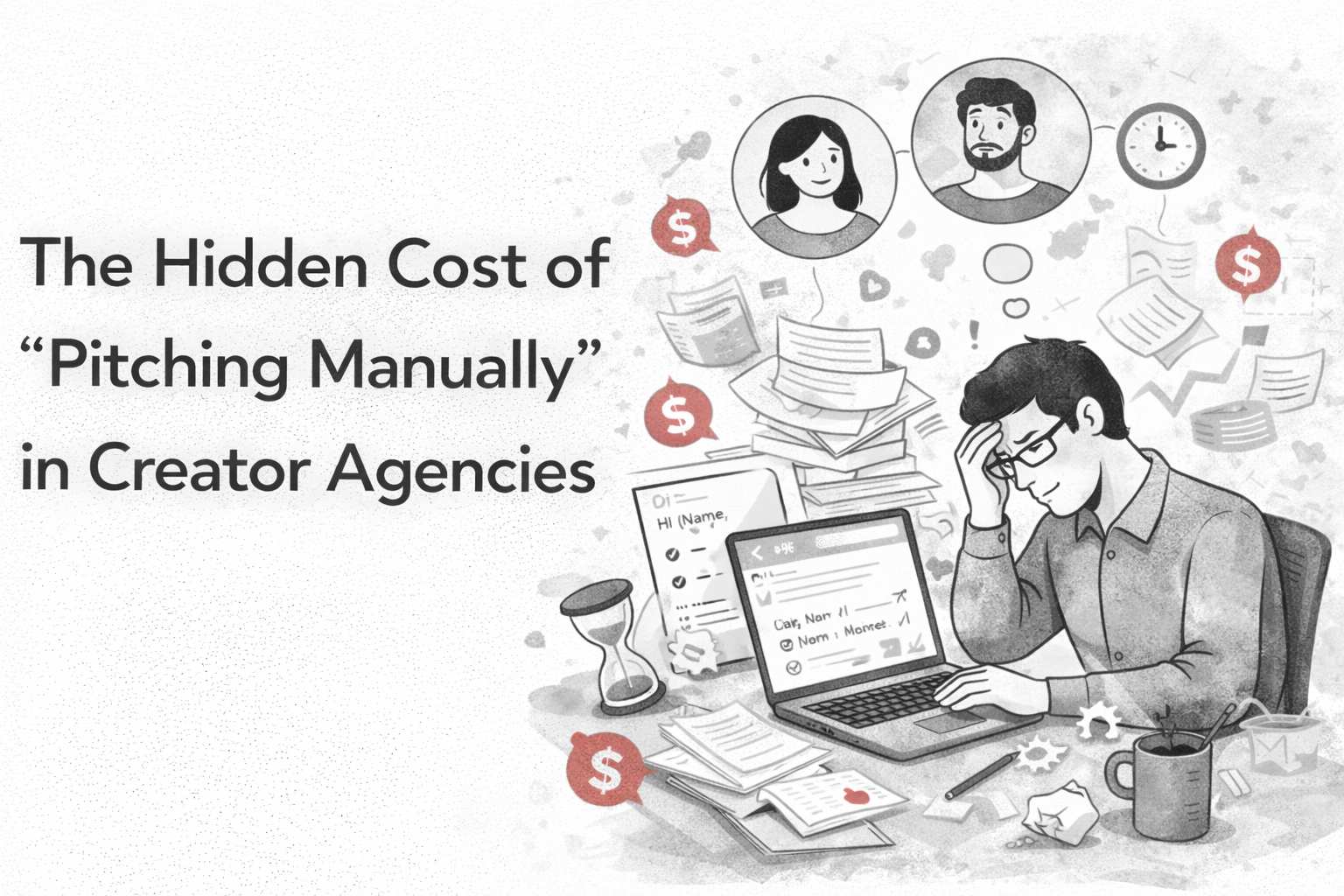
AI pitch generator, influencer outreach automation, creator brand pitching, talent agency efficiency
Most talent managers underestimate how expensive manual pitching really is.
It’s not just time.
It’s lost deals.
The Manual Pitching Trap
A typical workflow: 1. Research brand 2. Write pitch from scratch 3. Customize for creator 4. Send email 5. Track manually
This takes 15–30 minutes per pitch.
At 20 pitches per week, that’s 10+ hours gone.
But the bigger issue isn’t time — it’s inconsistency.
What Actually Breaks
Manual pitching leads to:
Generic outreach
Weak personalization
Inconsistent quality
No structured tracking
Even worse, pitches live in inboxes with no connection to deals.
If a brand replies weeks later, the context is gone.
What “Good” Pitching Actually Requires
A high-performing pitch needs:
Creator context (niche, audience, performance)
Brand context (campaign, positioning, timing)
Clear rationale (why this match works)
A specific idea (not just “let’s collaborate”)
Most managers don’t have time to consistently hit all four.
How AI Changes the Unit of Work
AI doesn’t just speed up writing.
It standardizes quality.
A strong AI pitching system should:
Pull creator data automatically
Use brand context dynamically
Inject match rationale
Suggest a concrete deliverable
And most importantly:
Turn the pitch into a structured deal the moment it’s sent.
From Message → Deal → Data
When pitching is structured:
Every pitch becomes a tracked entity
Every reply is linked to context
Every outcome feeds future decisions
This creates a feedback loop:
Which brands respond
Which creators convert
Which angles work
Manual workflows cannot create this loop.
Practical Takeaway
If your team is:
Spending hours writing pitches
Getting inconsistent replies
Losing track of outreach
You don’t need better copy.
You need a system that turns outreach into structured, compounding data.