What Makes a Great Influencer Contract? Key Clauses Every Brand and Creator Should Include
Date Published
May 13, 2026
Written by
Michael Gratteri
Time to Read
5 min
Influencer marketing has evolved far beyond simple product exchanges and sponsored Instagram posts.
Today, creator partnerships can involve six-figure campaigns, long-term brand ambassadorships, exclusive agreements, content licensing rights, and performance-based compensation structures.
Yet despite the growing sophistication of the creator economy, many partnerships still begin with vague email agreements, informal messages, or poorly written contracts.
This creates risk for everyone involved.
Brands worry about missed deliverables and unclear ownership rights.
Creators worry about delayed payments, changing expectations, and unpaid work.
The solution is simple: a well-structured influencer contract.
Whether you're a creator, talent manager, agency, or brand, understanding what belongs in an influencer agreement can help protect your interests and create stronger partnerships.
Why Influencer Contracts Matter More Than Ever
Many people view contracts as legal formalities.
In reality, they are communication tools.
A good contract ensures both parties understand:
What work is being delivered
When it will be delivered
How much compensation will be paid
Who owns the content
What happens if circumstances change
Without these details, misunderstandings become almost inevitable.
As influencer marketing budgets continue to increase, clear agreements have become essential rather than optional.
The Most Common Contract Mistakes
Before discussing what should be included in an influencer contract template, it's important to understand where partnerships often go wrong.
Some common problems include:
Undefined Deliverables
A brand expects three Instagram Reels.
The creator believes they only agreed to one.
Without clear documentation, both sides can feel frustrated.
Unclear Payment Terms
Questions frequently arise such as:
When will payment be made?
Is payment tied to campaign completion?
Are there performance bonuses?
These details should never be left open to interpretation.
Content Ownership Disputes
Many creators assume they own the content they produce.
Many brands assume they can reuse content indefinitely.
Without clear licensing terms, disagreements can quickly emerge.
Scope Creep
A campaign begins with one deliverable but gradually expands to include additional revisions, extra content requests, and new obligations.
A strong contract prevents these situations from becoming problematic.
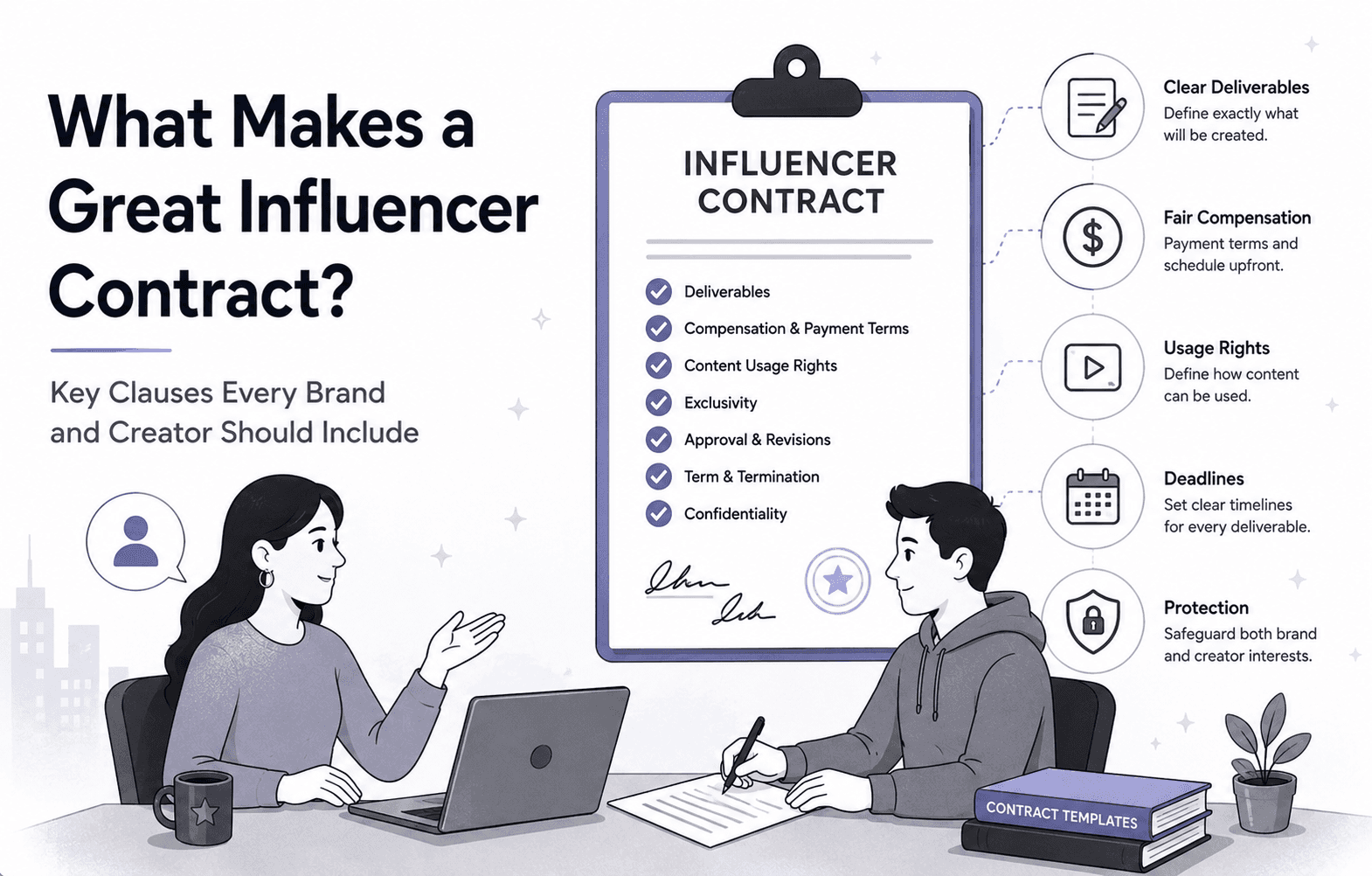
Essential Clauses Every Influencer Contract Should Include
1. Parties Involved
The agreement should clearly identify:
Brand name
Creator name
Agency or talent manager (if applicable)
This may seem obvious, but proper identification is the foundation of every contract.
2. Campaign Scope and Deliverables
This section should define exactly what is expected.
Examples include:
Instagram Reels
TikTok videos
YouTube integrations
Story posts
Product photography
Live appearances
The more specific the language, the lower the likelihood of future disputes.
3. Content Deadlines
Every deliverable should have a corresponding deadline.
Include:
Draft submission dates
Review periods
Final publishing dates
Clear timelines help keep campaigns on track and reduce operational confusion.
4. Compensation Terms
A social media influencer contract should always specify:
Total payment amount
Payment schedule
Payment method
Currency
Late payment provisions
Creators should never begin work without understanding how and when they will be paid.
5. Usage Rights and Licensing
This is one of the most important sections of any influencer marketing contract template.
Brands should clarify:
Where content can be used
How long content can be used
Whether paid advertising rights are included
Whether content can be modified
Creators should understand exactly how their work will be utilized after publication.
6. Exclusivity Clauses
Some brands require creators to avoid promoting competitors during a specified period.
The contract should define:
Which competitors are included
Duration of exclusivity
Geographic restrictions
Overly broad exclusivity terms can significantly limit a creator's future opportunities.
7. Approval and Revision Process
How many revisions are included?
Who provides approval?
How long does each review cycle last?
Clearly documenting these expectations helps prevent delays and unnecessary disagreements.
8. Termination Conditions
Sometimes campaigns need to be canceled.
A sample influencer contract should outline:
Valid termination reasons
Notice requirements
Compensation obligations
Deliverable ownership after termination
This protects both parties if circumstances change unexpectedly.
9. Confidentiality Requirements
Creators often receive access to unreleased products, campaigns, or strategic information.
Confidentiality clauses help protect sensitive business information throughout the partnership.
Why Generic Templates Often Create Problems
Many creators download free contract templates from the internet and assume they're protected.
Unfortunately, most generic templates are not designed for the complexities of modern influencer marketing.
Every campaign is different.
A one-time sponsored post requires different protections than a year-long ambassador partnership.
This is why agencies increasingly rely on dedicated influencer contract templates rather than generic agreements that fail to address creator-specific requirements.
Contracts Are Also an Operational Tool
Contracts don't just protect legal interests.
They also improve workflow efficiency.
When agreements clearly define expectations, agencies spend less time resolving misunderstandings and more time executing successful campaigns.
This becomes increasingly important as agencies manage larger volumes of creator partnerships.
Many teams now combine contract management with broader influencer campaign management systems to ensure deliverables, timelines, approvals, and communications remain aligned throughout the campaign lifecycle.
The Connection Between Contracts and Deal Execution
A signed agreement is not the finish line.
It's the starting point.
After contracts are approved, agencies still need to track:
Deliverables
Deadlines
Approvals
Campaign status
Payments
Without proper visibility, even well-written contracts can fail to achieve their purpose.
This is why many agencies are adopting creator deal tracking platforms that provide visibility into every stage of partnership execution after agreements are signed.
Protecting Relationships, Not Just Businesses
One misconception about contracts is that they only exist to resolve disputes.
The opposite is true.
The best contracts help prevent disputes from happening at all.
Clear expectations reduce friction.
Transparency builds trust.
Well-structured agreements allow creators and brands to focus on collaboration instead of clarification.
In many cases, the strongest creator partnerships are built on the strongest agreements.
Final Thoughts
Influencer marketing has become a serious business.
As campaign budgets increase and partnerships become more sophisticated, handshake agreements and vague email confirmations are no longer enough.
A well-designed influencer agreement protects creators, brands, agencies, and talent managers while creating a foundation for successful collaboration.
Whether you're launching your first creator campaign or managing hundreds of partnerships each year, investing in strong contract processes can save significant time, money, and frustration.
Looking for professional influencer contract templates designed specifically for creator partnerships? Explore Creator24's Influencer Contract Templates solution to simplify agreement creation, improve campaign execution, and support long-term creator-brand relationships.